Turntable types, part 1: design, drive, operation and phono preamp
Not all turntables are created equal. In the first part of our series we cover the basics: how a turntable is built, which drive systems exist, how much automation you need and whether a phono preamplifier should be built in.
Reading time approx. 5 minutes4 chaptersWith graphics & tables
How a turntable is built
Before we look at the individual types, it pays to look at the basic building blocks. Every turntable – from an entry-level model to a reference deck – consists of the same elements. The differences lie in how these components are designed, mounted and combined.
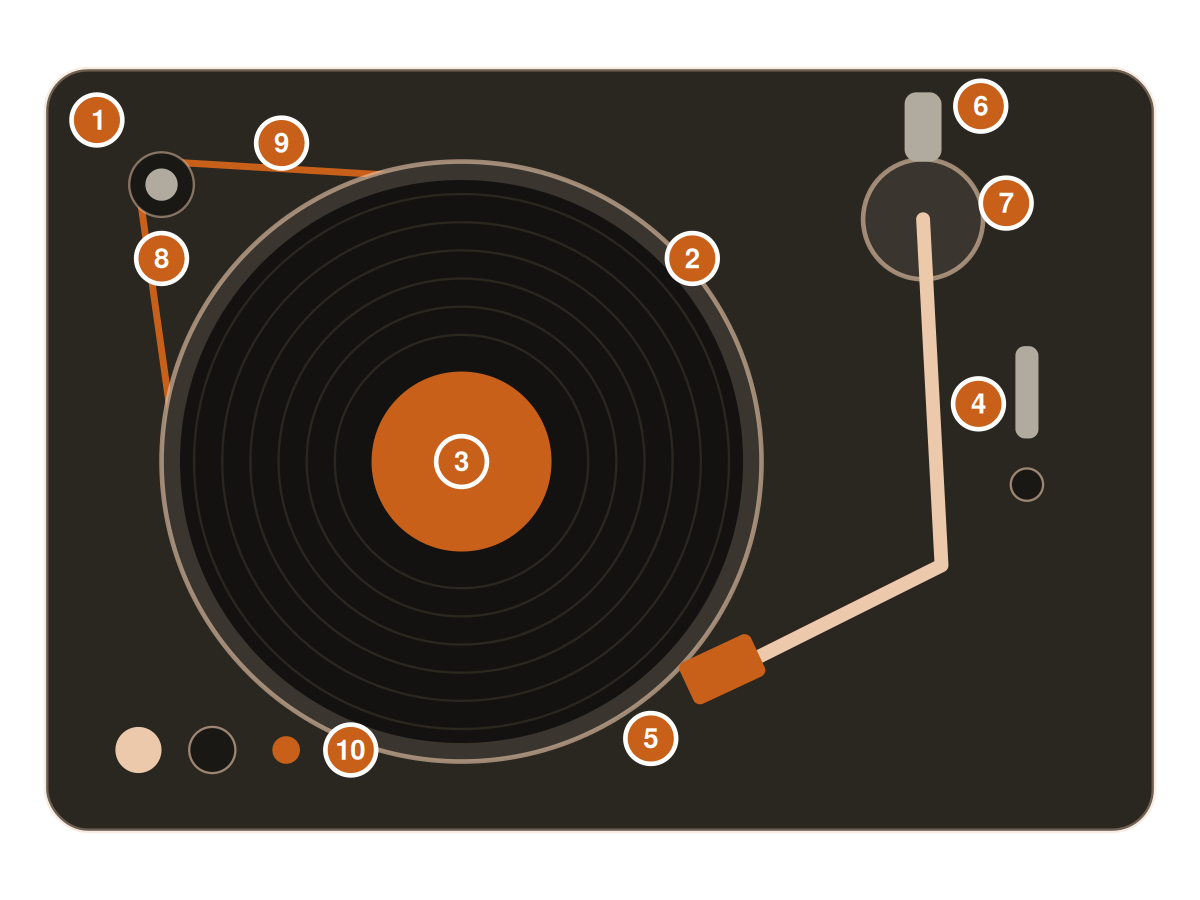
Housing and chassis. It carries all components and should pass on as little resonance as possible.
Spins the record at exactly 33⅓ or 45 revolutions per minute. Its mass and material shape speed stability.
The spindle the platter rotates on. Its running noise must never become audible.
Guides the cartridge through the groove precisely and with as little friction as possible.
Converts the tiny groove modulations into an electrical signal.
Sets the correct tracking force of the stylus, usually between 1.5 and 2.5 grams.
Mounts the tonearm, with anti-skating and a cueing lift for gently lowering the stylus.
Generates the rotation. The pulley determines the gear ratio.
Transfers power from the motor to the platter – on belt-drive turntables.
On/off, speed selection and, on automatic models, start and stop as well.
Drive systems: belt, direct, idler, string
The most important question for any turntable is: how is the platter set in motion? The goal is always perfectly even rotation without vibration. Four drive principles have become established – each with its own history and character.
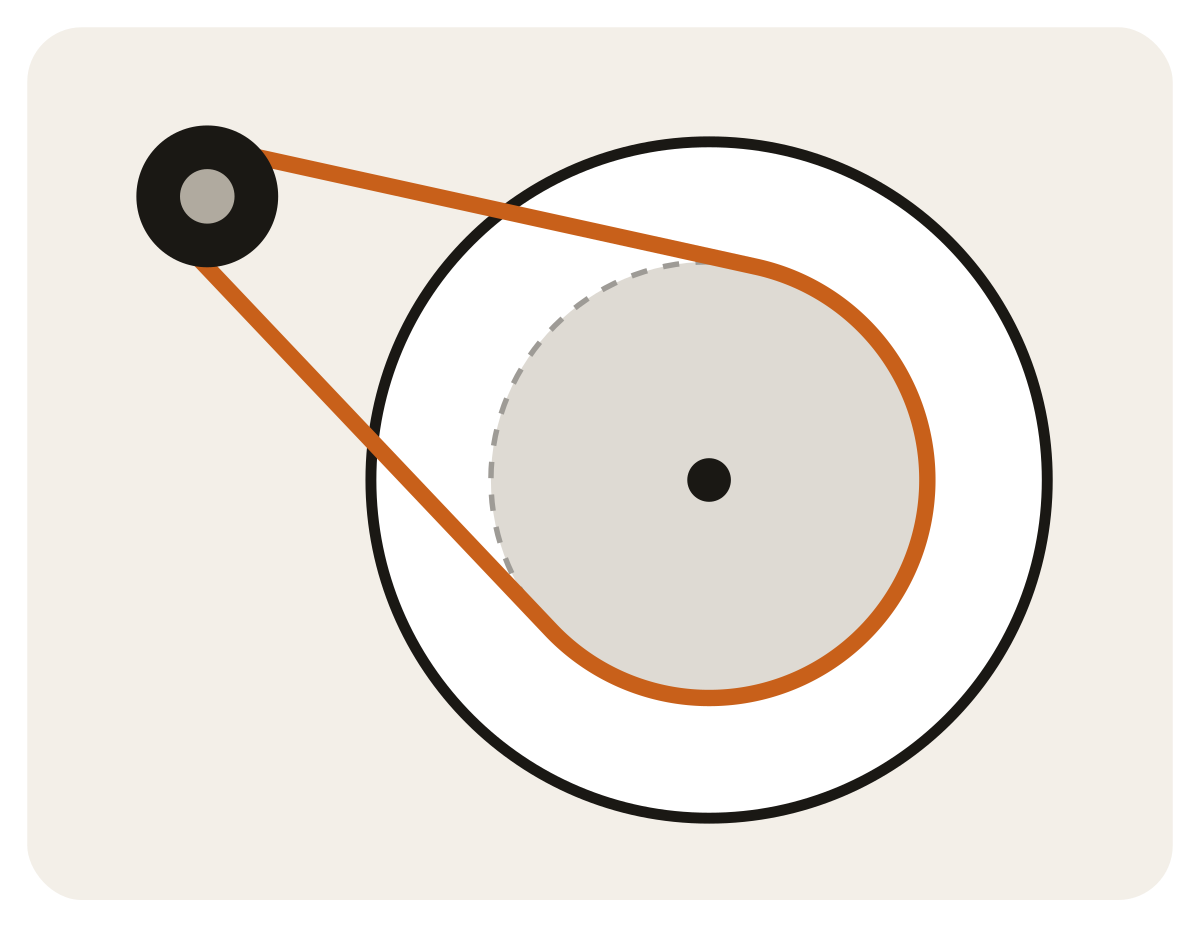
An elastomer or flat belt connects the motor to the platter or sub-platter. The belt effectively isolates motor vibrations – which is why it is the most widespread principle in hi-fi, from entry-level models to high-end decks.
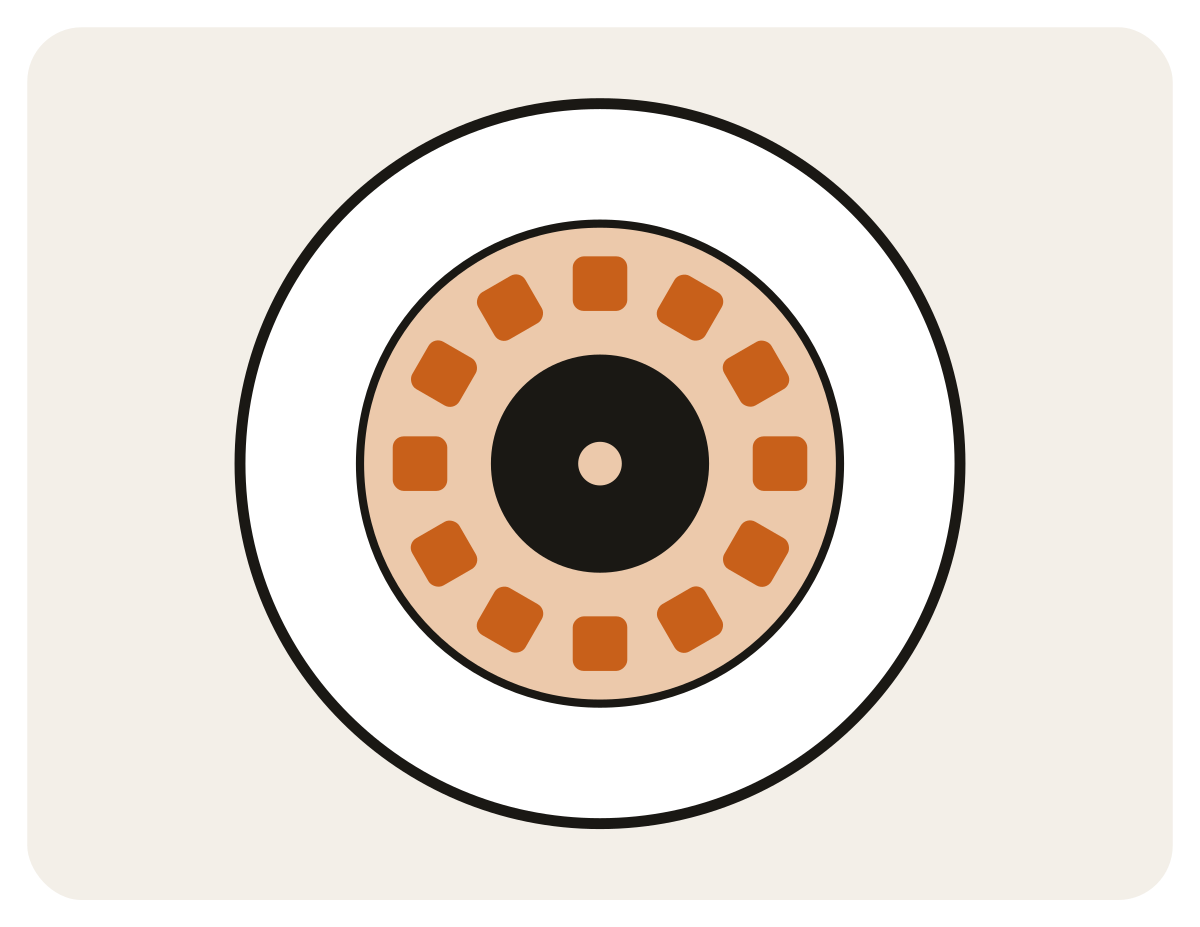
The platter sits directly on the rotor of a slow-turning motor controlled by quartz or PLL electronics. Ever since Technics introduced the SP-10 in 1970, it has stood for precise speed, high torque and lightning-fast start-up.
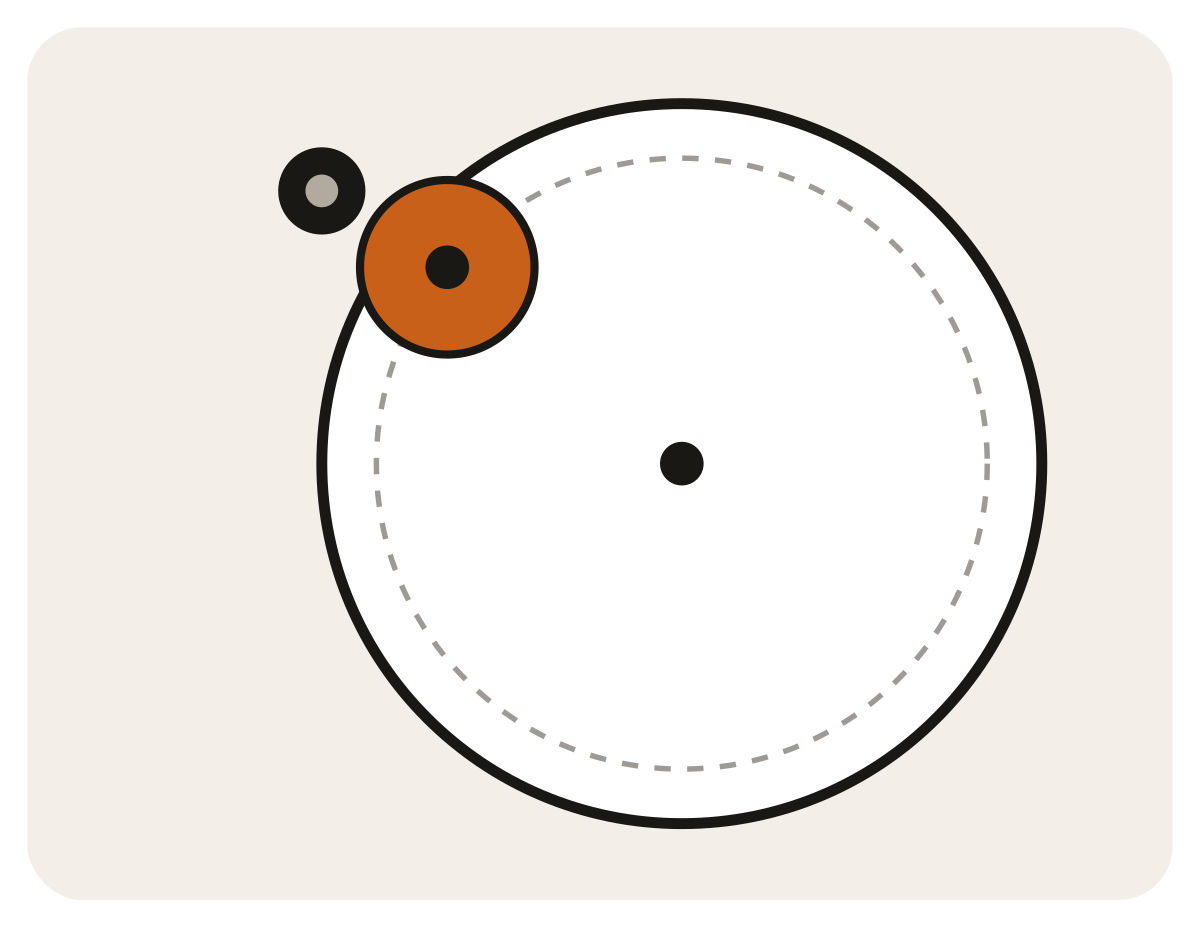
A rubberised idler wheel transfers power from the motor to the inner rim of the platter. Classics such as the Garrard 301 or the Lenco L75 are revered for their powerful, dynamic sound and are still lovingly restored today.
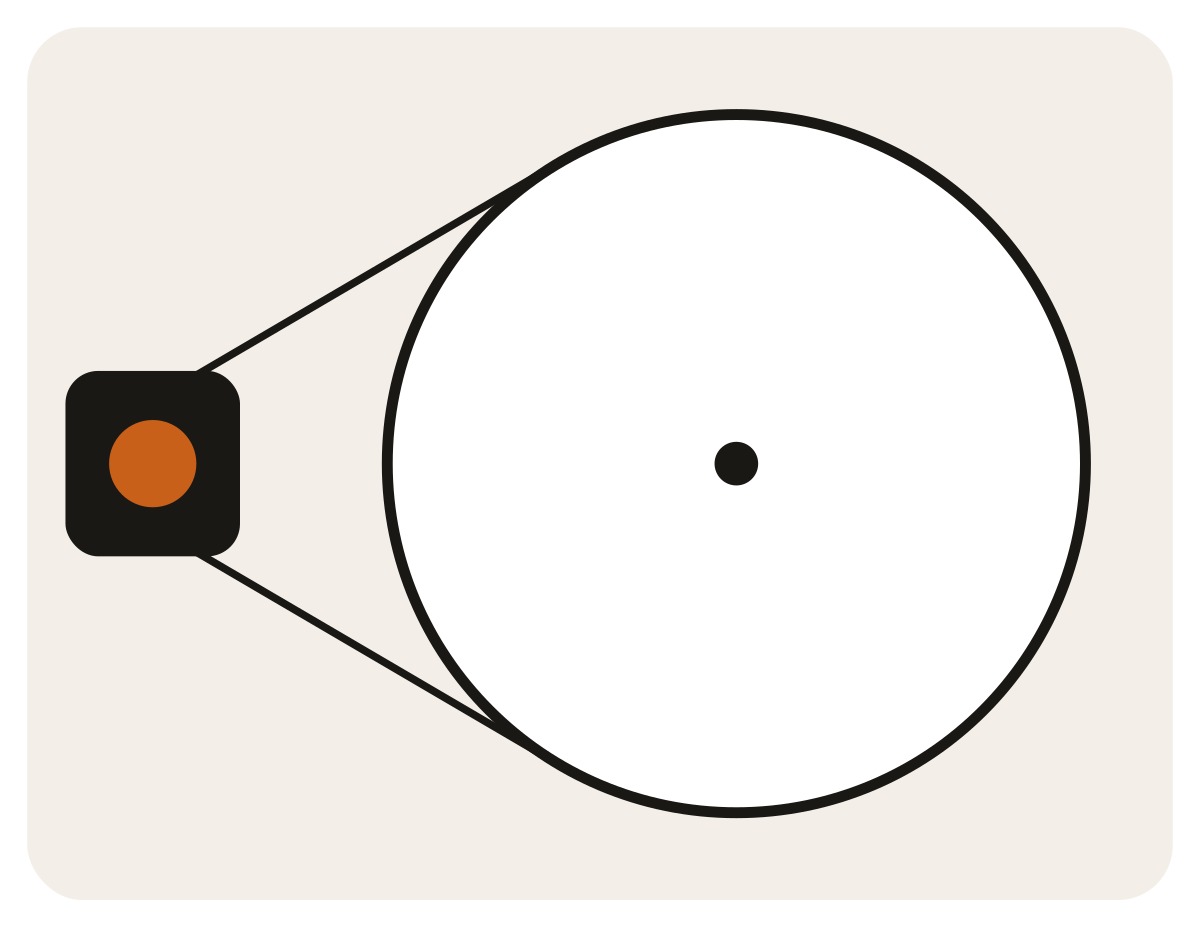
Instead of a belt, a thin, virtually non-stretching string drives the platter. It transmits speed with exceptional precision – usually on heavy mass-loaded decks with a separately positioned motor.
| Drive | Speed stability | Motor isolation | Start-up time | Typical use |
|---|---|---|---|---|
| Belt | very good | very good | a few seconds | Hi-fi from entry level to high end |
| Direct | excellent | depends on motor quality | very short | DJ, studio, hi-fi |
| Idler | very good | demanding | short | Vintage classics, enthusiasts |
| String | excellent | very good | longer | High-end mass-loaded decks |
Execution matters more than principle. A well-made direct drive can outperform a basic belt drive – and vice versa. Pay attention to the motor, too: high-quality decks use electronically controlled motors, sometimes with an external power supply or a separate motor housing.
Manual, semi-automatic or fully automatic
Another major distinguishing feature is ease of use. It ranges from purist manual operation to a turntable that does everything by itself at the push of a button.
| Step | Manual | Semi-automatic | Fully automatic |
|---|---|---|---|
| Move tonearm to the record | |||
| Lower the tonearm | |||
| Lift at the end of the record | |||
| Return the tonearm | |||
| Switch off the motor |
automatic by hand
You lower the tonearm by hand or with the lift and raise it yourself at the end. Less mechanism means fewer influences on the tonearm – which is why almost all sound-focused and high-end turntables are manual.
You start playback by hand; at the end of the record, the turntable lifts the arm by itself, returns it and switches off. A good compromise for anyone who doesn’t want to jump up right after the last groove.
One push of a button is all it takes: the turntable lowers the arm, plays the side and returns. Ideal for beginners and anyone who wants maximum convenience. Many models also select the right set-down point depending on record size.
The terms are not used entirely consistently: some “semi-automatic” models only lift the arm and stop the motor without returning it. A look at the product description helps. Historically there were also record changers – above all from Dual – that played several records in a row.
With or without phono preamplifier
A cartridge delivers a tiny signal: moving-magnet (MM) cartridges around 2 to 5 millivolts, moving-coil (MC) cartridges often only 0.2 to 0.5 millivolts. In addition, music is equalised according to the RIAA standard when the record is cut: bass is reduced, treble boosted. A phono preamplifier raises the signal to line level and precisely reverses this equalisation – only then can a normal amplifier input work with it.
Whether this phono stage sits in the turntable, in the amplifier or in a separate unit is an important distinguishing feature:
The classic route: flexible and upgradeable. Ideal if your amplifier has a phono input or you want to use a high-quality separate phono stage.
Usually switchable between phono and line. Works with any line input and directly with active speakers – practical for modern systems without a phono input.
A built-in analogue-to-digital converter sends the music to your computer. Ideal for digitising your record collection.
Sends the music wirelessly to speakers or headphones. Convenient – but wireless transmission comes with sonic compromises.
Suitcase and retro turntables have everything on board. An easy way to get started, but sonically no match for a hi-fi system.
Check whether your amplifier has an input labelled “Phono”. If not, you need a turntable with a built-in preamp or a separate phono preamplifier. Many turntables also have a ground terminal (GND): it prevents hum.
Part 2: chassis, platter, materials, bearings and high end
In the second part of our series we take a closer look at construction: chassis concepts from mass-loaded to suspended sub-chassis designs, platters and sub-platters, plinths made of wood, aluminium, acrylic or stone, the various platter bearings – and high-end solutions such as vacuum hold-down and air bearings.


